Wednesday, 29 August 2012

1920-30♥

Fashion from 1920-30:


The end of world war one came with a complete change in people's attitudes, they began to look forward. Designers were using a more youthful and contemporary approach. The whole world modernised.  

Behavior and attitude changed completely; everything was less formal, clothes became casual, young people had more freedom, girls smoked in public, cut off there hair, wore make-up and shortened there skirts. The 'Flapper Girl' Fashion was born...


This new version of femininity was also a product of cinema, people (as they still do to this day) strived to look like the movie stars. The 'Vamped style came into fashion, inspired by the likes of Theda Bara and Pola Negri; the eyes became focal (dark and dramatic) and it was fashionable to conceal the brow and forehead with a ribbon, band, hat or thick fringe. 


Monday, 5 March 2012

1910-20 ♥

Fashion from 1910 to 1920:


In the early part of the decade, fashion was fairly dignified, but in 1914, World War I broke out. The world changed and by the end of the decade, so did fashion. Many other events also changed society, for example; the women's suffrage movement, the Great Influenza and the titanic sank in 1912. 

Dresses took on a whole new dimension. Gone was the corseted waist and in its place was the hobble skirt. Paul Poiret is credited with this fashion movement heavily influenced by Eastern design and colors. Some skirts were so narrow that it was nearly impossible to move. For fear of splitting the skirt, women sometimes wore a length of cord to keep their legs from moving apart too much. It is not clear why they thought this was a good idea, but it's interesting that this movement occurred alongside the suffrage movement.


The Great War (1914 to 1918) changed people's lives in dramatic ways. Men went off to fight  and women were left at home to work in the factories. As women's independence increased, so did the workload and there need for practical shoes increased. People were encouraged to be less frivolous. Clothing became more like uniform and took on a mannish tailored appearance. Hemlines began to inch up as wartime shortages made fabric scarce. Lace-up boots came back into fashion, valued for practicality. Mens and women's fashion started to become very similar. Many materials were used in shoe construction, for example; leathers mixed with canvas or gabardine to form a 'two-tone' effect. 


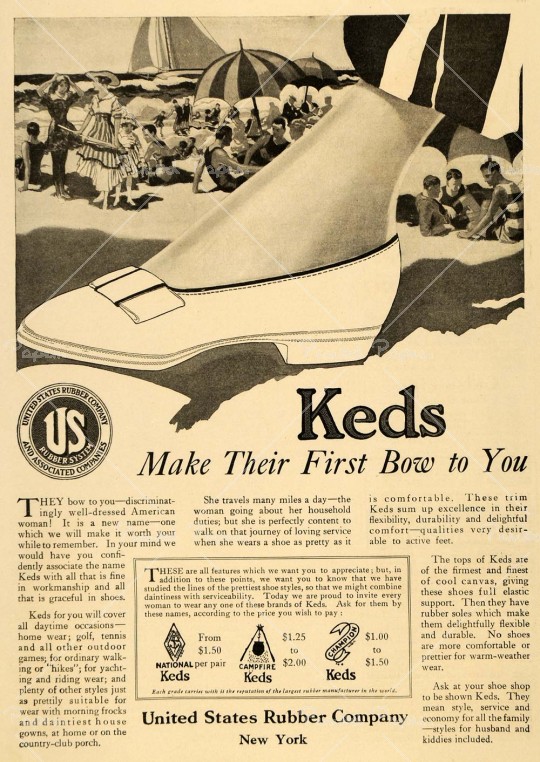
Fashion took another turn when the war ended. As peoples intentions and interests changed, so did clothing. Sportswear became increasingly popular and were formed into everyday dress. U.S. Rubber developed the first sneaker, called Keds, in 1917. The word "sneaker" was coined quite literally because the rubber sole made the shoe stealthy — all other shoes, with the exception of moccasins, made noise when you walked! 


Overall i feel that from 1910 to 1920 fashion took many twists and turns. From glamourous to workwear to sportswear, it got increasingly more comfortable and practical took on a new meaning. 

Monday, 6 February 2012

1900-10 ♥

Fashion from 1900 to 1910:


Fashion from 1900 - 1910 was often thought of as the 'The edwardian era' after King Edward. The french refer to it as La Belle Époque, or 'Beautiful Age', It was an era of high quality, beautiful clothes at the peak of luxury for the very rich. 

It was normal to make dresses in two pieces, A heavily boned corset was worn over another S-bend corset, Then a top bodice. By 1905 Press Fasteners were used to keep the bodice to the skirt, before that it was just hooks and eyes. during the day a high neck was worn but then during the evening it turned into a sweetheart, low neckline to show of jewelry. 

Many laces and silks were used to make fine garments. The hourglass figure were very much 'in'. A tiny waist could often cause deformity of ribs, and potential risks to your health. Children, girls in particular, would often wear copies of the women's clothes.

Narrow feet were also very sort after in this decade, people would often wear there shoes a size smaller. In the day most women wore boots. It is rumored that some women even cut off there little toe to fit this criteria! 


 Men would often wear suits or one too three button cutaway frock coats, with straight tailored trousers. The neat look. Knee length overcoats were generally worn and a cane was standard. Boys and young men wore three piece suits. 

It was clear to see that there was a specific criteria to follow to be 'normal' and 'attractive' but it is clear to see that nearing the end of the decade things were become more practical and comfortable.